Source laser hemorrhoids treatment device for Anorectal, Urology, and Fistula
Compare 22 laser hemorrhoids treatment device options featuring dual wavelengths of 980nm and 1470nm. Buyers can evaluate specifications like power, fiber types, and working modes for applications in anorectal, urology, and microsurgery.
Key considerations
Products List


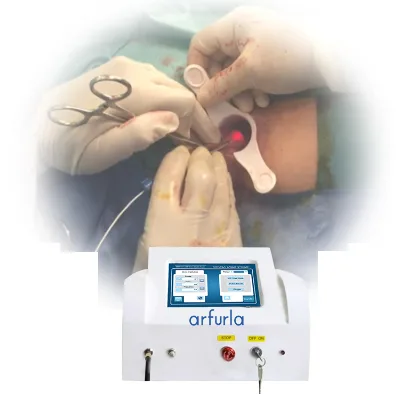


Comprehensive Sourcing Guide
Strategic Sourcing Guide for Laser Hemorrhoids Treatment Devices
The global demand for minimally invasive anorectal surgical solutions has driven significant innovation in diode laser technology. For procurement professionals in the medical equipment sector, sourcing a laser hemorrhoids treatment device requires a rigorous understanding of optical specifications, regulatory compliance, and operational versatility. This guide provides a structured approach to evaluating potential suppliers and selecting equipment that meets clinical efficacy standards while adhering to strict procurement protocols. The focus remains on evidence-based attributes derived from current market offerings, ensuring that buyers make informed decisions based on verified technical parameters rather than marketing assertions.
Technical Specifications and Optical Performance
The core of any hemorrhoids treatment laser lies in its wavelength configuration and power delivery capabilities. Market analysis indicates that the most effective devices for this application utilize a dual-wavelength system, specifically combining 980nm and 1470nm diodes. The 980nm wavelength is primarily absorbed by hemoglobin, making it ideal for coagulating blood vessels, while the 1470nm wavelength is highly absorbed by water, facilitating efficient tissue ablation and vaporization. Buyers must verify that the device explicitly supports this dual-wavelength capability, as single-wavelength units may lack the versatility required for complex procedures involving both vascular control and tissue removal.
Power output is another critical specification. Observed configurations in the current market range from single 30W units to dual-source systems offering combined outputs such as 30W+17W or 47W total power. The ability to modulate power between 1W and 60W allows surgeons to tailor the energy delivery to the specific size and severity of the hemorrhoidal tissue. Furthermore, the device must offer multiple working modes, including Continuous Wave (CW), Pulse, and Single pulse modes. Pulse durations typically range from 0.01 seconds to 1.00 second, providing the flexibility to control thermal diffusion and minimize damage to surrounding healthy tissue.
The fiber optic delivery system is equally vital. The laser energy is transmitted via fibers with diameters commonly available in 400μm, 600μm, and 800μm options. The choice of fiber diameter depends on the specific surgical technique, such as Pile Laser Treatment (PLDT) or Endovenous Laser Treatment (EVLT). Buyers should confirm the fiber type, which may be radial or conical, and ensure the connector interface adheres to the international SMA 905 standard. This standardization ensures compatibility with a wide range of surgical instruments and reduces the risk of connection failures during critical procedures. Additionally, an adjustable red aiming beam at 650nm is essential for precise targeting, with intensity control features to ensure visibility without interfering with the surgeon's view.
Regulatory Compliance and Certification Verification
In the medical device sector, regulatory compliance is not merely a formality but a prerequisite for market entry and clinical adoption. Procurement teams must prioritize suppliers who can provide valid certifications from recognized bodies. The most common certification observed for these devices is the CE mark, indicating conformity with health, safety, and environmental protection standards for products sold within the European Economic Area. However, for broader international acceptance, particularly in regions requiring stricter quality management systems, buyers should look for ISO 13485 certification for medical device quality management and ISO 9001 for general quality management.
It is crucial to distinguish between the certification of the device itself and the certification of the manufacturing facility. A device may carry a CE mark, but if the manufacturer lacks ISO 13485, the consistency of production quality may be questionable. Buyers should request copies of current certificates and verify their validity dates. The product origin is frequently listed as China for these specialized laser systems, which is a major manufacturing hub for medical diode lasers. While the origin is a factual observation, it necessitates a deeper dive into the supplier's quality assurance processes to ensure that the "Made in China" label does not correlate with lower quality control standards.
Cost Drivers and Pricing Structures
The pricing for laser hemorrhoids treatment devices exhibits a wide variance, with observed ranges extending from approximately $1 to $45,000 USD. This broad spectrum reflects differences in power output, technological sophistication, bundle inclusions, and the level of after-sales support provided. Lower-priced units may be basic single-wavelength systems with limited power modulation, while high-end units often feature dual wavelengths, advanced cooling systems, and comprehensive software suites for procedure tracking.
When evaluating cost, buyers must look beyond the unit price to consider the total cost of ownership. This includes the cost of consumables, such as the disposable or reusable laser fibers. Some products are marketed with both disposable and reusable fiber options, which significantly impacts long-term operational expenses. Reusable fibers require sterilization protocols and have a limited lifespan, whereas disposable fibers offer convenience but incur recurring costs per procedure. The gross weight of the unit, often around 19kg for the main console, also influences shipping and logistics costs, which can be substantial for heavy medical equipment.
Typical Clinical Applications and Versatility
While the primary indication for these devices is the treatment of hemorrhoids and anal fistulas, the technical specifications suggest a broader range of applications. The dual-wavelength capability and power modulation allow for use in microsurgery, urology, abdominal procedures, and ENT (Ear, Nose, and Throat) surgeries. Specific functions listed in product data include vascular removal, physical therapy, nail fungus removal, lipolysis, skin tag removal, and dental laser applications. This versatility is a significant value driver, as it allows medical facilities to utilize a single device for multiple departments, maximizing return on investment.
The device is specifically designed for adult patients, as indicated by the target group classification. Procedures such as Pile Laser Treatment (PLDT) and Endovenous Laser Treatment (EVLT) are standard applications where the laser's ability to coagulate and ablate tissue with minimal bleeding is paramount. The inclusion of "Fistula" in the functional description highlights the device's capability to treat complex anorectal conditions beyond simple hemorrhoidectomy. Buyers should verify that the device's software and preset protocols support these specific procedures to ensure clinical efficacy.
Supplier Evaluation and Quality Control
Selecting a reliable supplier requires a multi-faceted evaluation strategy. Since the market contains numerous manufacturers, buyers must scrutinize the supplier's track record in the medical device sector. Key evaluation criteria include the consistency of product specifications, the availability of technical documentation, and the responsiveness of the after-sales support team. The presence of a dedicated technical support team is essential for troubleshooting fiber connection issues, calibrating the aiming beam, and managing software updates.
Quality control measures should be embedded in the procurement contract. Buyers should demand a detailed inspection report prior to shipment, verifying that the power output, wavelength accuracy, and fiber integrity meet the specified standards. The packaging standard, often an aluminum alloy box, is designed to protect the sensitive optical components during transit. However, buyers must ensure that the packaging dimensions, which can vary from 43x39x55cm to 56x50x42cm, align with their logistics capabilities. The net weight of the device, observed at 6.3kg for some models, should also be factored into the shipping strategy.
Long-Term Procurement Considerations
Sourcing a medical laser device is a long-term investment that extends beyond the initial purchase. Buyers must consider the availability of spare parts, the lifespan of the laser diodes, and the cost of maintenance contracts. The laser diodes are the heart of the system, and their degradation over time can affect the output power and wavelength stability. A robust maintenance plan should be established to ensure the device remains within its specified performance parameters throughout its operational life.
Furthermore, the adaptability of the device to future clinical needs is a critical factor. As surgical techniques evolve, the ability to upgrade the device's software or add new fiber types can extend the useful life of the equipment. Buyers should inquire about the supplier's roadmap for product development and their commitment to supporting older models. The "Customization" attribute observed in the market suggests that some suppliers offer tailored solutions, which can be advantageous for facilities with unique procedural requirements. However, customization should be carefully evaluated to ensure it does not compromise the device's regulatory compliance or standard safety features.
Comparative Analysis of Device Configurations
To facilitate a clearer decision-making process, the following table summarizes the key technical variations observed in the market. This comparison highlights the differences in power, fiber types, and certifications that buyers should consider when evaluating specific units.
| Feature | Configuration A | Configuration B | Configuration C |
|---|---|---|---|
| Wavelength | 980nm + 1470nm | Dual Wavelength 980/1470 | Dual Wavelength 980/1470 |
| Total Power | 30W | 30W + 17W | 47W |
| Fiber Type | Radial Fiber | Conical Fiber | 400/600/800μm |
| Fiber Diameter | 600um | Variable | 400/600/800μm |
| Connector | SMA 905 | SMA905 International | SMA905 International |
| Pulse Duration | 0.00s - 1.00s | 0.01 - 1s | 0.01 - 1s |
| Certification | CE | CE / ISO13485 / ISO9001 | CE / ISO13485 / ISO9001 |
| Weight (Gross) | 19kg | Not Specified | Not Specified |
| Weight (Net) | Not Specified | 6.3kg | Not Specified |
| Packing | Aluminium Alloy Box | Not Specified | 433955cm |
This table illustrates that while the core wavelength and connector standards remain consistent, the power configurations and fiber options vary significantly. Buyers must align these specifications with their clinical protocols to ensure the selected device meets their specific operational needs.
In conclusion, sourcing a laser hemorrhoids treatment device requires a balanced approach that prioritizes technical precision, regulatory compliance, and long-term value. By focusing on the verified attributes of dual-wavelength capability, power modulation, and international certifications, procurement professionals can identify suppliers that offer reliable, high-performance equipment. The complexity of the market demands due diligence, but a structured evaluation process ensures that the selected device will enhance clinical outcomes and support the strategic goals of the medical facility.
FAQs
What wavelengths does the laser hemorrhoids treatment device use?
The device utilizes a dual-wavelength system combining 980nm and 1470nm diodes. This configuration allows for effective hemoglobin coagulation and water-based tissue ablation during anorectal procedures.
Can the device operate in different working modes?
Yes, the system supports Continuous Wave, Pulse, and Single pulse modes. Pulse durations range from 0.01 to 1.00 seconds, providing flexibility for various surgical techniques and tissue types.
Which certifications are required for this medical equipment?
Valid certifications include CE, ISO 13485, and ISO 9001 standards. These documents verify compliance with safety regulations and quality management systems for medical device manufacturing and distribution.
How is the laser energy delivered to the surgical site?
Energy is transmitted via radial or conical fibers with diameters of 400, 600, or 800 micrometers. The fiber connector adheres to the international SMA 905 standard for reliable attachment.
What is the power output range for the laser system?
Power output varies from 30W to 47W depending on the specific configuration. Some models offer dual-source systems with combined outputs like 30W plus 17W for enhanced versatility.
Can the device be customized for specific clinical needs?
Customization is available for tailored surgical solutions. Buyers should verify that any custom modifications maintain regulatory compliance and do not compromise the device's safety features or warranty.